
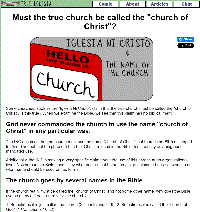
The article argues against the Iglesia Ni Cristo’s claim that the true church must be called the “church of Christ,” stating that this idea has no biblical basis. It explains that while the phrase appears in the Bible, there is no command mandating its exclusive use for naming churches. The Bible, in fact, refers to the church in various ways, including as the “church of God” or “church of the saints.” Additionally, the article points out that extra-biblical names like “Baptist” or “Presbyterian” are not prohibited by scripture. The INC is critiqued for adding unscriptural requirements and misunderstanding Protestant practices, as many Protestant churches do consider themselves part of the “church of Christ.” The article concludes that the INC’s insistence on this naming convention is unbiblical and adds unnecessary rules to scripture.
The Iglesia Ni Cristo believes that the true church must be called the “Church of Christ” (Iglesia Ni Cristo in Tagalog) because of specific biblical references, such as Romans 16:16, which mentions the “churches of Christ.” For INC, this naming is more than just a title; it is an essential identifier of the true church founded by Christ. Other names (e.g., “church of God” or “church of the saints”) used in the Bible describe aspects of the church but do not replace the core identity of the church as belonging to Christ. These are descriptive terms rather than proper names. Romans 16:16 is a directive to call the church by this specific name.
Names like “Baptist” or “Presbyterian,” which are not found in the Bible, are human inventions and deviate from the true, biblical church. These names reflect divisions in Christianity, which Christ did not establish. Since Christ is the head of the church (Colossians 1:18), the church must bear His name. The use of non-biblical names undermines the church’s unity and divine authority. Acts 4:12, which speaks to the exclusivity of salvation through Christ, is the basis for keeping Christ’s name central in the identity of the church.
Simply believing one is part of the “church of Christ” does not make it so, especially if the church does not bear Christ’s name explicitly. The Protestant churches, by using denominational titles, have separated themselves from the true church established by Christ. Despite their theological connections to Christ, they fail to adhere to the biblical mandate to call themselves the “church of Christ.” They are offshoots of Catholicism and part of the “apostate” church, which fell away from the true teachings after the apostolic era.
The true church is both spiritually and visibly united under the name “church of Christ.” The article’s interpretation of spiritual unity without an official name undermines the visible unity that Christ intended for His church. INC’s strict adherence to this name is a mark of being the one true church. In John 17:21, Jesus prays for the unity of believers. The unity is not just spiritual but also organizational and visible, which is best represented through the use of Christ’s name in the church.
While the article accuses INC of “adding to the law” by requiring a specific name for the church, INC is simply following the clear biblical example and not adding any new commands. Not adhering to the biblical name “church of Christ” represents a departure from scripture, and thus, those who do not use this name are the ones introducing unbiblical practices. INC rejects the idea that allowing flexibility in naming the church (such as using “Baptist” or “Presbyterian”) is a biblical liberty, seeing it instead as a deviation from Christ’s intended church structure and name.
 True Iglesia Information